
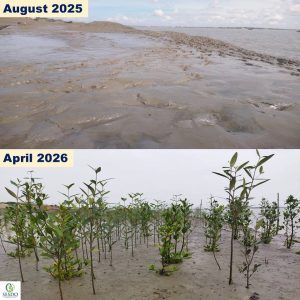
𝐏𝐥𝐚𝐧𝐭𝐢𝐧𝐠 𝐦𝐚𝐧𝐠𝐫𝐨𝐯𝐞𝐬 𝐚𝐥𝐨𝐧𝐞 𝐰𝐨𝐧’𝐭 𝐬𝐚𝐯𝐞 𝐨𝐮𝐫 𝐜𝐨𝐚𝐬𝐭𝐬! 𝐇𝐞𝐫𝐞’𝐬 𝐰𝐡𝐲…
Mangrove restoration is not a numbers game. Many projects fail because:
*Seedlings are planted in the wrong tidal zones
*Hydrology (water flow) is not restored properly
*Communities are not fully engaged long-term
*There is no monitoring
*There is no sustainable livelihood support
*Focus is on quick planting numbers, not long-term survival
In coastal Satkhira district of Bangladesh, we also face challenges like:
*Cattle grazing
*Fishing
*Boating disturbances
What actually works:
*Proper tidal inundation
*Correct species-site matching
*Secure land tenure
*Community ownership
*Livelihood incentives
*Long-term monitoring
We must prioritize CBEMR method, hydrology, species selection, community stewardship, and sustainable livelihoods. Mangrove restoration requires patience, science, social systems, and long-term practical design. It is not just about planting trees or taking photos of planting days.
As a proud GEAF Ambassador, I am excited to join the global movement on 4.29 Green Earth Action Day under the Green Earth Action Foundation Ambassador Programme. We are ready, and our Mangroves4Life project is expanding to deepen community-led restoration and climate resilience in coastal Bangladesh.