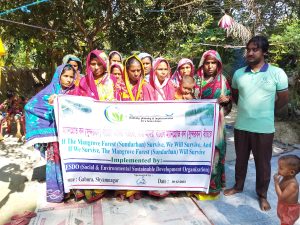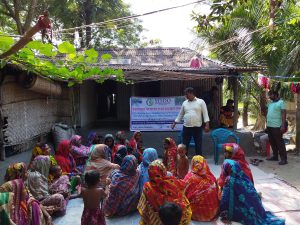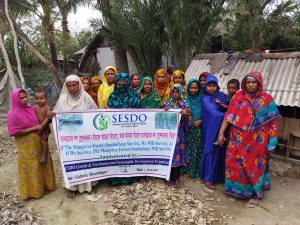
Project Title: If the Mangrove Forest (Sundarban) survives, we will survive. And if we protect it first, the mangrove forest (Sundarbans) can also protect us.
Project Introduction
The Sundarbans, the largest mangrove forest in the world and a UNESCO World Heritage Site—is a lifeline for millions of people in coastal Bangladesh. It provides natural protection against cyclones and floods, supports biodiversity, and sustains livelihoods for communities who depend on its resources.
Today, this vital ecosystem is under serious threat from climate change, deforestation, pollution, and unsustainable resource use. This project is built on a simple but powerful belief: the survival of the Sundarbans and the survival of coastal communities are inseparable.
Through community-led conservation, sustainable livelihoods, and climate resilience actions, this initiative seeks to protect the Sundarbans while improving the well-being, safety, and economic security of the people who live alongside it ensuring a sustainable future for both nature and communities.
Project Location
| Country | District | Upazila |
| Bangladesh | Satkhira | Shyamnagar |
Objectives
- Raise awareness on the importance of the Sundarbans for biodiversity, climate regulation, and community livelihoods.
- Promote sustainable resource management and support the restoration and regeneration of mangrove ecosystems.
- Strengthen the climate resilience of coastal communities through capacity building, alternative livelihoods, and disaster risk reduction.
- Foster community participation, stewardship, and ownership in mangrove protection and restoration efforts.
- Encourage cross-border cooperation between Bangladesh and India for the conservation and sustainable management of the Sundarbans.
Mission
Our mission is to promote a balanced and inclusive approach to conservation and sustainable development in the Sundarbans region where people and nature thrive together. By combining traditional knowledge, community leadership, and scientific innovation, we aim to protect the ecological integrity of the mangrove forest while enhancing the quality of life for local communities.
Beneficiary Communities
This project directly and indirectly benefits:
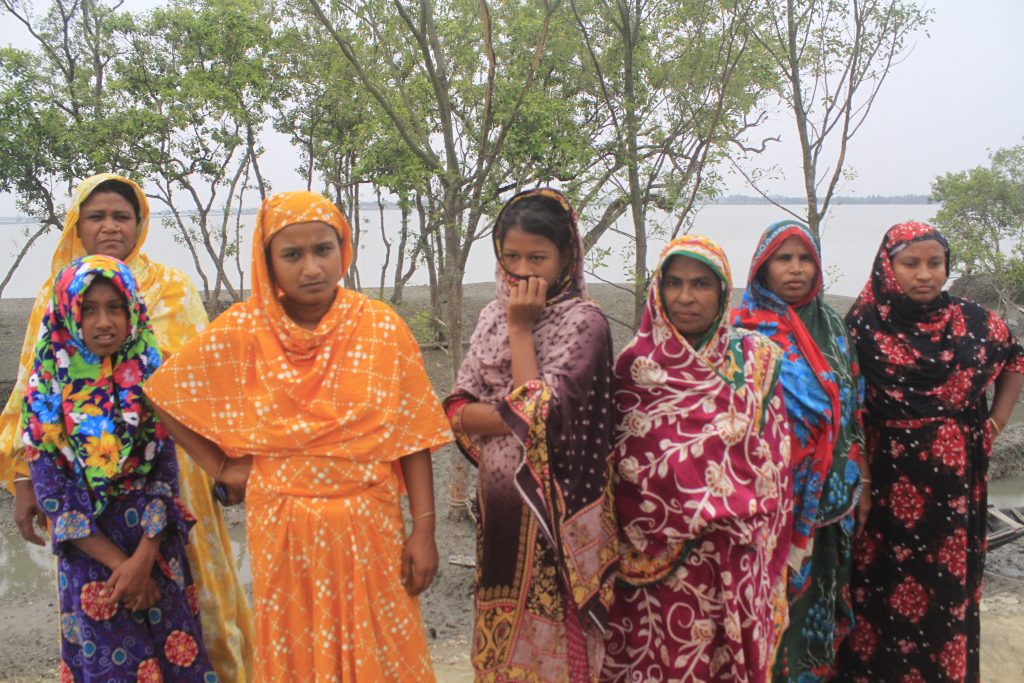
- Coastal communities dependent on the Sundarbans, including fishermen, farmers, and honey collectors.
- Indigenous and marginalized groups whose culture and livelihoods are deeply connected to the mangrove ecosystem.
- Researchers, scientists, and conservation practitioners working on climate adaptation and biodiversity protection.
- Government institutions and policymakers engaged in environmental management, disaster risk reduction, and community development.
Key Benefits
- Conservation of biodiversity and critical ecosystem services such as carbon storage, flood control, and coastal protection.
- Improved livelihood opportunities through sustainable practices and eco-friendly income generation.
- Increased community resilience to climate risks including cyclones, sea-level rise, and salinity intrusion.
- Stronger community empowerment through participatory decision-making and local leadership.
- Enhanced transboundary collaboration between Bangladesh and India for shared environmental conservation goals.