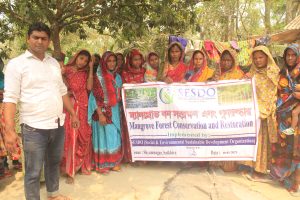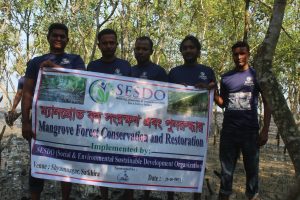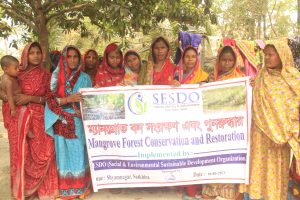
Project Title: Mangrove Forest Conservation and Restoration
Project Overview
Forests worldwide are declining at an alarming rate due to population pressure, industrialization, agricultural expansion, and urbanization. This degradation has intensified the impacts of climate change, including rising global temperatures, melting polar ice caps, sea-level rise, and increased natural disasters.
Bangladesh’s low-lying coastal regions are highly vulnerable. Salinity intrusion is degrading soil and water quality, threatening agriculture, livelihoods, and public health. Forest loss also contributes to biodiversity decline, ecosystem imbalance, and emerging health risks.
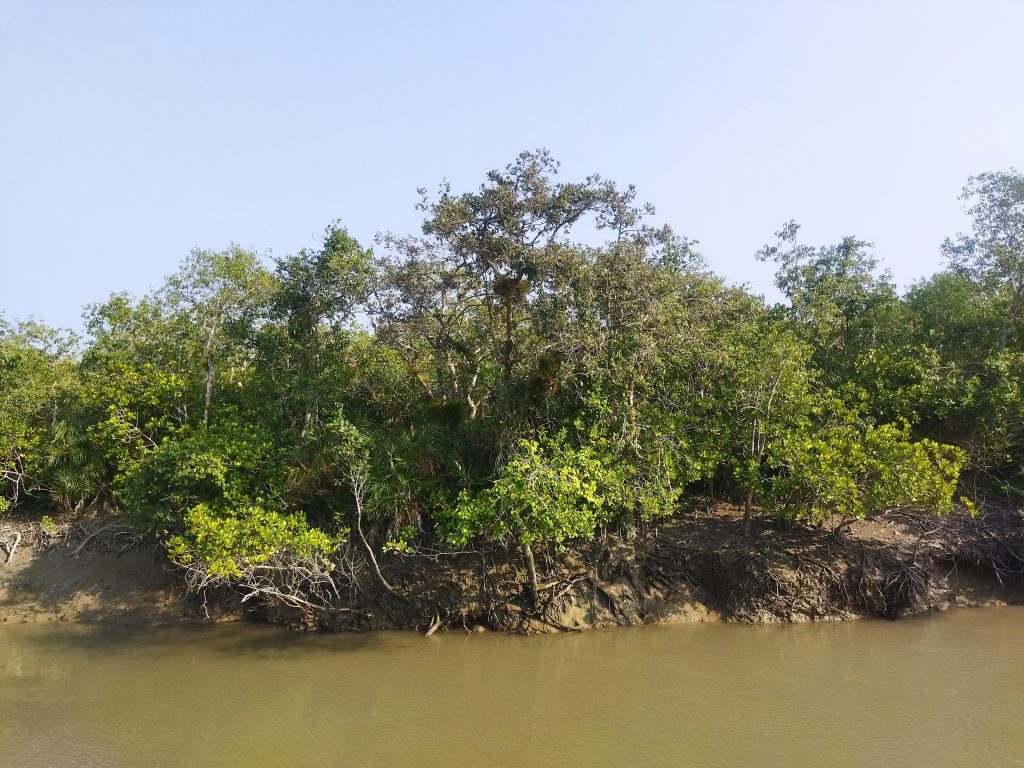
Mangrove forests play a critical role in addressing these challenges. They act as natural barriers against cyclones and storm surges, support biodiversity, provide food and livelihoods, improve water quality, and contribute to climate mitigation through carbon sequestration. Protecting and restoring mangrove forests is essential for environmental sustainability and human well-being.
This project focuses on conserving and restoring mangrove ecosystems in the Sundarbans while strengthening community participation, traditional knowledge, and sustainable livelihoods.
Project Duration:
2022 – 2024
Location:
| District | Upazila | Union |
| Satkhira | Shyamnagar | Gabura |
Rationale
Bangladesh is home to the Sundarbans, the largest mangrove forest in the world. Millions of people in coastal areas depend on this forest for their livelihoods. However, unsustainable resource use and environmental degradation threaten both the ecosystem and local communities.
SESDO has been working in the Sundarbans to promote mangrove conservation, ecosystem restoration, and community development. This project emphasizes that long-term conservation is only possible when local communities are actively involved and benefit from sustainable alternatives.
Project Objectives
- Restore degraded mangrove forest areas through community-based plantation and care
- Conserve existing mangrove ecosystems and protect biodiversity
- Raise community awareness on the environmental and socio-economic impacts of mangrove degradation
- Create alternative livelihood opportunities to reduce pressure on forest resources
- Conduct regular awareness meetings and community engagement activities to strengthen local stewardship
Significance of the Project
Bangladesh has one of the lowest per capita forest areas in the world, less than 0.02 hectares per person. Continued deforestation threatens biodiversity, increases climate vulnerability, and accelerates land degradation, salinity intrusion, floods, and erosion.
Many plant and animal species are already endangered, and some have become extinct. If current trends continue, forest resources could face severe depletion in the next few decades.
Mangrove conservation and restoration reduce disaster risks, stabilize coastlines, improve livelihoods, and protect biodiversity. Large-scale afforestation and restoration, supported by community participation and social forestry approaches, can significantly reduce the impacts of climate change and natural disasters.
This project safeguards remaining forest land, restores degraded areas, strengthens community–government collaboration, and ensures long-term environmental and social resilience.