
Project Title:
CSA-3 Formula: Integrated Climate-Smart Agriculture, Agroforestry, and Agritourism for Resilient Coastal Communities in Bangladesh
Implementing Organization:
SESDO (Social and Environmental Sustainable Development Organization)
Project Area:
Katakhali Village, Tala Upazila, Satkhira District, Bangladesh
Target Beneficiaries:
- Rural households in coastal Bangladesh (especially women, youth, and marginalized groups)
- Smallholder farmers practicing backyard farming
- Communities dependent on agriculture and fisheries
Background & Rationale
Bangladesh’s coastal regions face severe climate vulnerabilities: salinity intrusion, water scarcity, erratic rainfall, rising temperatures, and extreme weather events. These threats endanger agriculture, livelihoods, and food security.
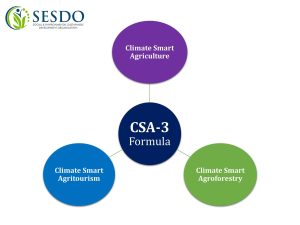
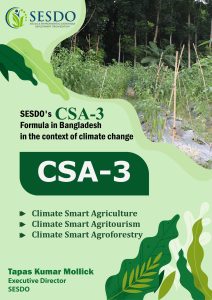
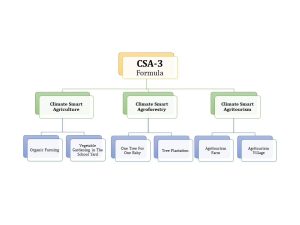
To address these challenges, SESDO introduces the CSA-3 Formula, a first-of-its-kind integrated approach in Bangladesh, combining:
- Climate-Smart Agriculture (CSA): Organic and chemical-free farming, cultivation of climate-resilient crops, backyard vegetable gardening, and fish enclosure-based vegetable farming.
- Climate-Smart Agroforestry (CSA): Integration of trees and shrubs with crop and livestock systems for soil fertility, environmental sustainability, and diversified income.
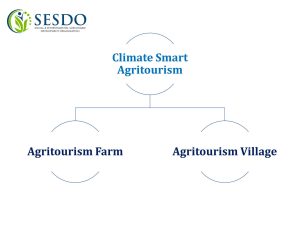
- Climate-Smart Agritourism (CSA): Farm- and village-based tourism that showcases sustainable practices, provides alternative income, and raises climate awareness.
By linking these three pillars, the CSA-3 Formula enhances productivity, resilience, and adaptation simultaneously, ensuring food security, income generation, and environmental sustainability.
Project Objectives
Overall Objective:
Enhance climate resilience, sustainable livelihoods, and food security in coastal communities through an integrated CSA-3 approach.
Specific Objectives:
- Promote organic farming and climate-resilient crops in home yards and community farms.
- Introduce fish enclosure-based vegetable farming to improve nutrition and income.
- Implement agroforestry practices for soil fertility, environmental sustainability, and income diversification.
- Develop climate-smart agritourism initiatives to generate additional income and promote awareness.
- Build capacities of women, youth, and marginalized groups in sustainable agriculture, agroforestry, and eco-tourism.
- Facilitate replication and scaling of the CSA-3 Formula in other coastal regions.
 Key Activities
- Climate-Smart Agriculture
- Backyard organic vegetable gardening
- Climate-resilient crop cultivation for salinity-prone and water-stressed areas
- Fish enclosure-based vegetable farming demonstrations
- Farmer and women group training sessions
- Climate-Smart Agroforestry
- Integration of trees, shrubs, and perennial crops into farms
- Distribution of seedlings and technical guidance
- Promotion of fruit and multipurpose trees for income and ecosystem balance
- Climate-Smart Agritourism
- Development of farm-based and village tourism sites
- Training in eco-tourism, hospitality, and visitor engagement
- Showcasing organic farming, backyard gardens, and fish-vegetable systems
- Capacity Building & Awareness
- Workshops, field training, and knowledge-sharing for farmers, women, and youth
- Educational manuals and community campaigns to promote integrated CSA practices
- Monitoring & Evaluation
- Tracking crop productivity, adoption rates, and income generation
- Assessing climate resilience, skills development, and community empowerment
- Sharing lessons learned and best practices for scaling
Expected Outcomes
- Enhanced food security: Backyard vegetable gardening, climate-resilient crops, and fish enclosure-based systems improve household nutrition and income.
- Strengthened climate resilience: Communities adopt integrated CSA-3 practices.
- Women & youth empowerment: Targeted engagement increases employment, skills, and entrepreneurship.
- Sustainable livelihoods: Agroforestry and agritourism generate alternative income and economic stability.
- Scalable model: CSA-3 becomes replicable across other coastal and climate-vulnerable regions.
Innovation & Uniqueness
- First integrated CSA-3 Formula in Bangladesh linking climate-smart agriculture, agroforestry, and agritourism.
- Incorporates organic farming, backyard vegetable gardening, climate-resilient crops, and fish enclosure-based vegetable farming.
- Strong focus on women and youth empowerment.
- Combines food security, income generation, and environmental sustainability in one model.
Alignment with National & Global Priorities
- Supports Bangladesh Climate Change Strategy and Action Plan (BCCSAP 2008)
- Contributes to Nationally Determined Contributions (NDCs) under the Paris Agreement
- Promotes Sustainable Development Goals (SDGs):
- SDG 1: No Poverty
- SDG 2: Zero Hunger
- SDG 5: Gender Equality
- SDG 8: Decent Work & Economic Growth
- SDG 13: Climate Action
- SDG 15: Life on Land
Sustainability Plan
- Community ownership: Women and youth manage farms, agroforestry plots, and agritourism sites.
- Income generation: Vegetable sales, fish production, agroforestry products, and tourism fees sustain operations.
- Knowledge transfer: Manuals, field workshop, and demonstration plots ensure long-term adoption.
- Replication potential: CSA-3 designed for scaling across other coastal regions.
 Conclusion
The CSA-3 Formula is a holistic, innovative, and climate-resilient model addressing climate change, food security, livelihood vulnerability, and women/youth empowerment in Bangladesh’s coastal regions. By integrating climate-smart agriculture, agroforestry, and agritourism, SESDO offers a replicable, sustainable solution that promotes organic farming, backyard gardening, climate-resilient crops, and fish enclosure-based vegetable farming, strengthening livelihoods and resilience for vulnerable communities.
This project showcases SESDO’s commitment to innovation, sustainability, and social impact, providing a model for national and global replication.