
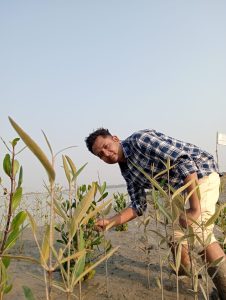
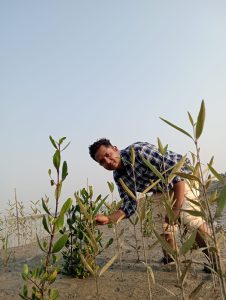
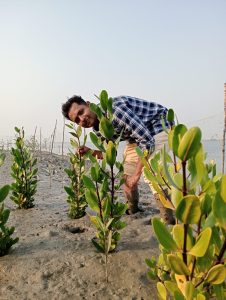
𝐏𝐥𝐚𝐧𝐭𝐢𝐧𝐠 𝐦𝐚𝐧𝐠𝐫𝐨𝐯𝐞𝐬 𝐚𝐥𝐨𝐧𝐞 𝐰𝐨𝐧’𝐭 𝐬𝐚𝐯𝐞 𝐨𝐮𝐫 𝐜𝐨𝐚𝐬𝐭𝐬! 𝐇𝐞𝐫𝐞’𝐬 𝐰𝐡𝐲…
Mangrove restoration is not just a numbers game. Many projects fail because:
*Seedlings are planted in the wrong tidal zones
*Hydrology (water flow) is not restored properly
*Communities are not fully engaged long-term
*There is no monitoring
*There is no sustainable livelihood support
*Focus is only on quick planting numbers, not long-term survival
In coastal Satkhira district of Bangladesh, we also face real field challenges like:
*Cattle grazing
*Fishing
*Boating disturbances
So what actually works?
*Proper tidal inundation
*Correct species-site matching
*Secure land tenure
*Community ownership
*Livelihood incentives
*Long-term monitoring
This is why we must prioritize CBEMR method, hydrology, species selection, community stewardship, and sustainable livelihoods in Mangroves4Life.
From my field experience in coastal Satkhira, I believe mangrove restoration needs patience, science, social systems, and long-term practical design. It is not just about planting trees or taking photos on planting days. It is about survival, resilience, and long term ecological design.