
One Tree For One Baby: A Continuous, Birth-to-Birth Climate Action Model
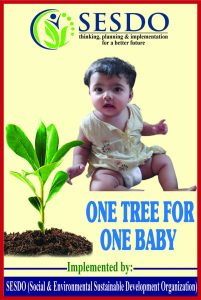
Implementing Organization: SESDO (Social & Environmental Sustainable Development Organization)
Project Area: Khalishkhali Union, Tala Upazila, Satkhira District, Bangladesh
Project Duration: 3 Years (Phase–1)
Project Type: Climate Action • Nature-Based Solutions • Child-Centered Sustainability • Youth Engagement • Community Resilience
Background & Problem
Khalishkhali Union is highly climate-vulnerable, facing salinity intrusion, degraded soils, declining tree cover, and frequent cyclones. Families, especially low-income households, lack long-term natural assets for newborns, and youth engagement in environmental action is limited. No child-centered climate model exists in the region.
Project Summary
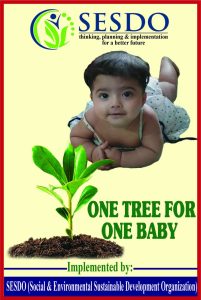
One Tree For One Baby links every newborn to a climate-resilient tree, creating a lifelong bond between children and nature. Operating 365 days a year, SESDO delivers to each newborn within 48 hours:
- A climate-resilient tree sapling
- A newborn gift box
- Guidance on planting and care
Over three years, ~900 newborns in 32 villages will receive trees, fostering environmental stewardship, expanding green cover, and creating long-term economic and ecological assets.
Innovation & Uniqueness
- Child-centered, nature-based approach from birth
- Continuous, year-round implementation
- Youth-led digital monitoring through a 32-member Youth Green Task Force
- Trees as future economic assets for families
- Low-cost, scalable, and community-owned model
Goal & Objectives
Goal: Enhance environmental sustainability and child well-being through birth-linked tree ownership.
Objectives:
- Ensure 100% newborn tree ownership
- Promote lifelong environmental stewardship
- Restore green cover and biodiversity across 32 villages
- Develop youth-led digital tree tracking
- Generate evidence for district- and national-level replication
Beneficiaries
- Primary: ~900 newborns & families
- Secondary: Parents, youth volunteers, low-income households
- Indirect: Entire union population, schools, local institutions, and ecosystems
Key Activities
- Newborn Registration & Home Delivery – Deliver saplings & gift boxes, GPS-tag trees
- Youth-Led Monitoring – Quarterly tracking, digital database, tree health scorecards
- Family Engagement – Awareness sessions, commitment cards, annual Green Baby Festival
- Sustainability & Economic Benefits – Community nurseries, tree-based income training, “Cut One, Plant One” awareness
Expected Results
- ~900 saplings planted with 80–90% survival
- Youth Green Task Force trained & active
- Increased green cover and biodiversity
- Families adopt eco-friendly behaviors
- Children grow up with environmental stewardship values
Sustainability
- Community nurseries & youth monitoring ensure long-term impact
- Trees provide economic incentives to families
- Partnerships with local government, Forest Department, and community groups
- National replication toolkit to scale the model
Monitoring & Evaluation
- GPS tagging, photo documentation, quarterly monitoring
- Annual Newborn–Tree Growth Report
- Indicators: tree survival, youth engagement, green cover, household behavior change
Impact Statement
“As the baby grows, the tree grows—strengthening families, restoring nature, and building climate resilience for generations.”